2026 model year · Current generation (P703)
Ford Ranger payload capacity
Payload, 20261,373–1,767 lb
The 2026 Ford Ranger carries 1,373–1,767 lb of payload, depending on drive.
Ratings: GVWR 6,050–6,790 lb; front axle 2,930–3,351 lb; rear axle 3,570–3,615 lb.
2026 Ford Ranger Pickup Technical Specifications (01/13/26 V1.0)- Model years
- 2019–2026
- Configurations
- 9
- GVWR
- 6,050–6,790 lb
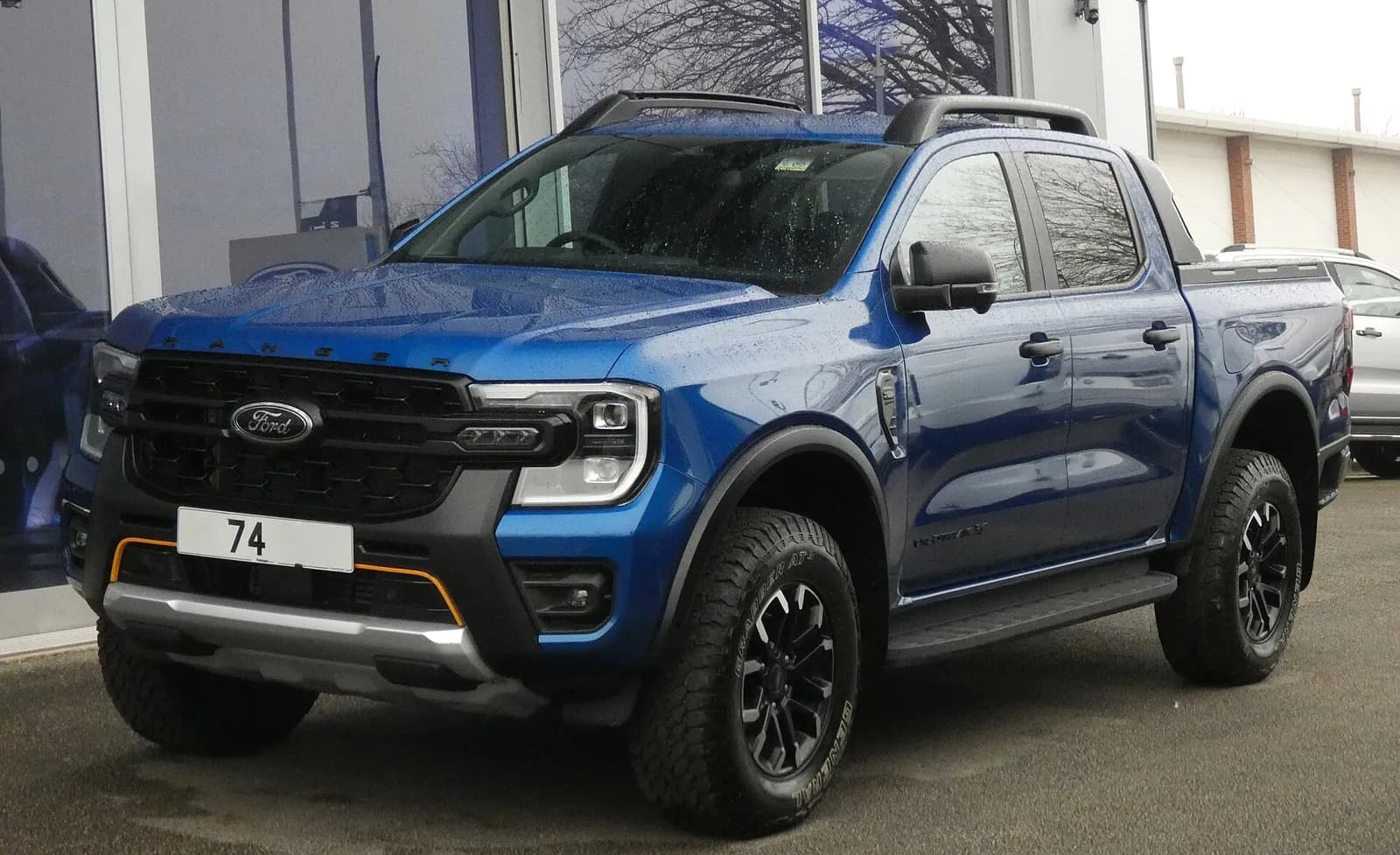

01 / Tables
Ranger payload capacity by model year
2026 Ford Ranger
Payload and weight ratings
| Configuration | Payload source 1lb | GVWR source 1lb | Front GAWR source 2lb | Rear GAWR source 2lb |
|---|---|---|---|---|
| 2.3L EcoBoost I-44x2 · XL, XLT, Lariat | 1,767 | 6,050 | 2,930 | 3,570 |
| 2.3L EcoBoost I-44x4 · XL, XLT, Lariat | 1,763 | 6,270 | 3,130 | 3,570 |
| 2.7L EcoBoost V64x4 · XLT, Lariat | 1,513 | 6,170 | 3,274 | 3,570 |
| 3.0L EcoBoost V64x4 · Raptor | 1,373 | 6,790 | 3,351 | 3,615 |
2025 Ford Ranger
Payload and weight ratings
| Configuration | Payload source 3lb | GVWR source 4lb | Front GAWR source 3lb | Rear GAWR source 3lb |
|---|---|---|---|---|
| 2.3L EcoBoost I-44x2 · XL, XLT, Lariat | 1,797 | 6,050 | 2,930 | 3,570 |
| 2.3L EcoBoost I-44x4 · XL, XLT, Lariat | 1,694 | 6,170 | 3,130 | 3,570 |
| 2.7L EcoBoost V64x4 · XLT, Lariat | 1,684 source 4 | not in our data | not in our data | not in our data |
| 3.0L EcoBoost V64x4 · Raptor | 1,375 | 6,790 source 3 | 3,351 | 3,615 |
2024 Ford Ranger
Payload and weight ratings
| Configuration | Payload source 5lb | GVWR source 6lb | Front GAWR source 5lb | Rear GAWR source 5lb |
|---|---|---|---|---|
| 2.3L EcoBoost I-44x2 · XL, XLT, Lariat | 1,805 | 6,050 | 2,930 | 3,570 |
| 2.3L EcoBoost I-44x4 · XL, XLT, Lariat | 1,711 | 6,170 | 3,130 | 3,570 |
| 2.7L EcoBoost V64x4 · XLT, Lariat | 1,711 source 6 | not in our data | not in our data | not in our data |
| 3.0L EcoBoost V64x4 · Raptor | 1,375 | 6,790 source 5 | 3,351 | 3,615 |
2022–2023 Ford Ranger
Payload and weight ratings
| Configuration | Payload source 7lb | GVWR source 7lb | Front GAWR source 7lb | Rear GAWR source 7lb |
|---|---|---|---|---|
| SuperCrew · 4.97-ft box4x2 | up to 1,818 | 6,050 | 2,930 | 3,500 |
| SuperCrew · 4.97-ft box4x4 | up to 1,609 | 6,050 | 3,130 | 3,370 |
| SuperCab · 6-ft box4x2 | up to 1,905 | 6,050 | 2,885 | 3,500 |
| SuperCab · 6-ft box4x4 | up to 1,696 | 6,050 | 3,108 | 3,370 |
2021 Ford Ranger
Payload and weight ratings
| Configuration | Payload source 8lb | GVWR source 8lb | Front GAWR source 8lb | Rear GAWR source 8lb |
|---|---|---|---|---|
| SuperCrew · 4.97-ft box4x2 · Any trim | up to 1,770 | 6,050 | 2,930 | 3,500 |
| SuperCrew · 4.97-ft box4x4 · Any trim | up to 1,560 | 6,050 | 3,130 | 3,370 |
| SuperCrew · 4.97-ft box4x4 · XLT, Lariatwith Tremor Off-Road Package (91T) | up to 1,430 source 9 | 6,050 | 3,130 | 3,370 |
| SuperCab · 6-ft box4x2 · Any trim | up to 1,860 | 6,050 | 2,885 | 3,500 |
| SuperCab · 6-ft box4x4 · Any trim | up to 1,650 | 6,050 | 3,108 | 3,370 |
2019–2020 Ford Ranger
Payload and weight ratings
| Configuration | Payload source 10lb | GVWR source 10lb | Front GAWR source 10lb | Rear GAWR source 10lb |
|---|---|---|---|---|
| SuperCrew · 4.97-ft box4x2 · Any trim | up to 1,770 | 6,050 | 2,930 | 3,500 |
| SuperCrew · 4.97-ft box4x4 · Any trim | up to 1,560 | 6,050 | 3,130 | 3,370 |
| SuperCab · 6-ft box4x2 · Any trim | up to 1,860 | 6,050 | 2,885 | 3,500 |
| SuperCab · 6-ft box4x4 · Any trim | up to 1,650 | 6,050 | 3,108 | 3,370 |
| SuperCab · Pickup box delete (SuperCab 4x2 XL, R1A)4x2 · XL | up to 2,080 | 6,050 | 3,130 | 3,500 |
02 / Over the years
How the Ranger payload capacity moved
- The top figure fell by 220 lb, from 2,080 lb in 2019–2020 to 1,860 lb in 2021.
- The top figure fell by 100 lb, from 1,905 lb in 2022–2023 to 1,805 lb in 2024 (Current generation (P703) replaced T6 (2019-2023, US)).
- The top figure rose by 45 lb, from 1,860 lb in 2021 to 1,905 lb in 2022–2023.
| Model years | Lowest | Highest | Configurations | Full specs |
|---|---|---|---|---|
| 2026 | 1,373 lb | 1,767 lb | 9 | Current generation (P703) specs |
| 2025 | 1,375 lb | 1,797 lb | 9 | Current generation (P703) specs |
| 2024 | 1,375 lb | 1,805 lb | 9 | Current generation (P703) specs |
| 2022–2023 | 1,609 lb | 1,905 lb | 4 | T6 (2019-2023, US) specs |
| 2021 | 1,430 lb | 1,860 lb | 12 | T6 (2019-2023, US) specs |
| 2019–2020 | 1,560 lb | 2,080 lb | 13 | T6 (2019-2023, US) specs |
03 / Most and least
Which Ranger leads and trails
- 1,767 lb
- 1,373 lb
- up to 2,080 lb
04 / What changes it
What moves the Ranger payload capacity
By drive
- 4x41,373–1,763 lb
- 4x21,767 lb
05 / Compared
Ranger against other midsize pickups
| Model | Model year | Payload |
|---|---|---|
| Ford Ranger | 2026 | 1,373–1,767 lb |
| Jeep GladiatorFord Ranger vs Jeep Gladiator | 2026 | 1,025–1,720 lb |
| Toyota TacomaFord Ranger vs Toyota Tacoma | 2026 | 1,230–1,710 lb |
| Chevrolet ColoradoChevrolet Colorado vs Ford Ranger | 2025–2026 | up to 1,151–1,684 lb |
| GMC Canyon | 2023 | 1,250–1,640 lb |
| Nissan FrontierFord Ranger vs Nissan Frontier | 2026–2027 | 1,100–1,590 lb |
| Honda Ridgeline | 2026 | 1,509–1,583 lb |
06 / Next
More on the Ranger
07 / FAQ
Questions people ask
What is the payload capacity of the 2026 Ranger?
The 2026 Ford Ranger carries 1,373–1,767 lb of payload, depending on drive. Ratings: GVWR 6,050–6,790 lb; front axle 2,930–3,351 lb; rear axle 3,570–3,615 lb.
Which 2026 Ranger carries the most?
The 2026 2.3L EcoBoost I-4, SuperCrew, 4.97-ft box, 10-speed automatic, 4x2, XL, XLT, Lariat, at 1,767 lb.
Which 2026 Ranger carries the least?
The 2026 3.0L EcoBoost V6, SuperCrew, 4.97-ft box, 10-speed automatic, 4x4, Raptor, at 1,373 lb.
What changes the Ranger’s payload capacity?
Drive, by Ford’s own figures for 2026. By drive: 4x4 1,373–1,763 lb; 4x2 1,767 lb.
Has the Ranger’s payload capacity changed over the years?
2026: 1,373–1,767 lb; 2025: 1,375–1,797 lb; 2024: 1,375–1,805 lb; 2022–2023: up to 1,609–1,905 lb; 2021: up to 1,430–1,860 lb. The top figure fell by 220 lb, from 2,080 lb in 2019–2020 to 1,860 lb in 2021.
What is the GVWR of the 2026 Ranger?
6,050–6,790 lb by configuration. GVWR is the most the vehicle may weigh with everything aboard; payload is what is left after the vehicle’s own weight.